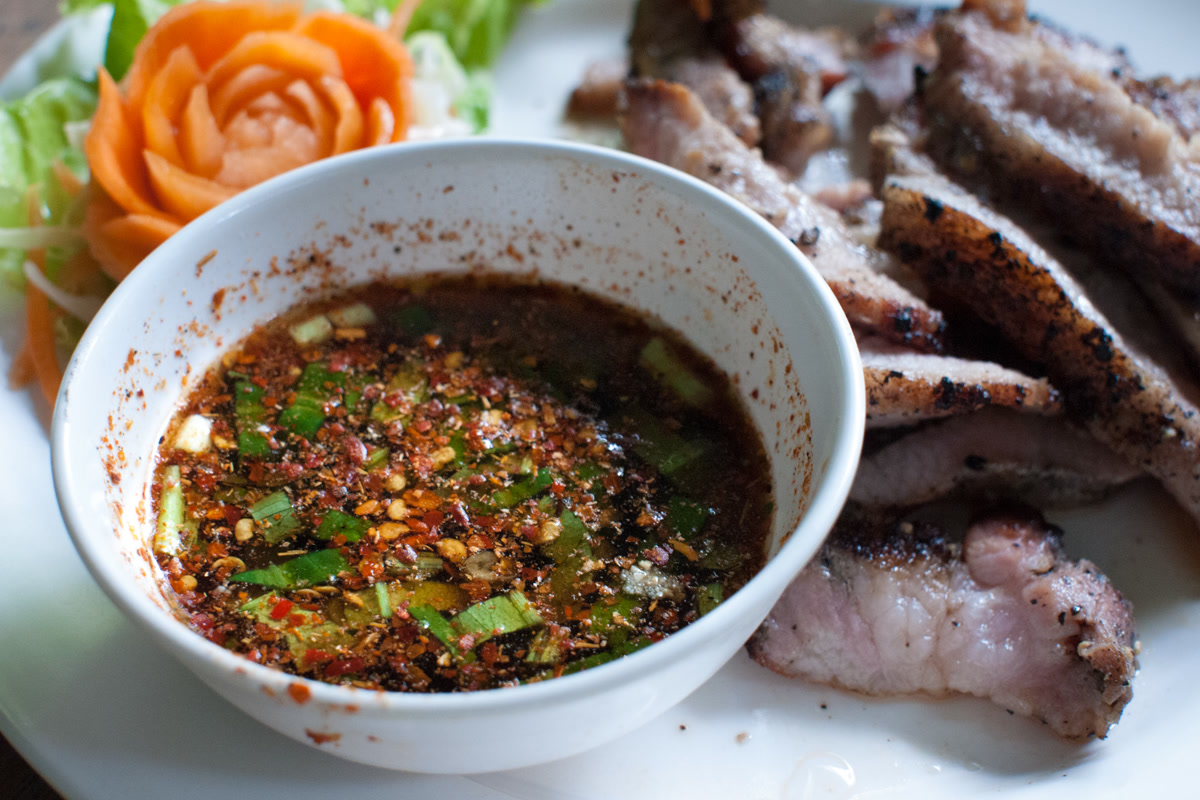
Nam Jim Jaew – Thai Dipping Sauce for Meat
Nam Jim Jaew (น้ำจิ้มแจ่ว, also transliterated as Nam Chim Chaeo) is a bold dipping sauce from northeastern Thailand. Tamarind and lime add acidity, fish sauce provides salt and umami, toasted chilies bring heat, and khao khua, toasted rice powder, gives the sauce its characteristic smoky aroma and lightly gritty texture.
The sauce is primarily intended for briefly dipping meat, not for use as gravy. In addition to the main version, there is a lighter variation for fatty or thinly sliced meat and a mellow tomato version that can be spooned more generously over food.
Preparation – toasted rice powder
For either the all-purpose or light version:
- 1 tbsp uncooked jasmine rice or glutinous rice
- Add the uncooked rice to a small dry skillet over medium-high heat. Stir constantly until the grains are dark brown. It may get smoky, so ensure good ventilation.
- Remove the rice from the pan immediately to stop the toasting.
- Grind it in a mortar and pestle or a spice or coffee grinder. Do not turn it into an entirely fine powder; a slightly gritty texture is desirable.
Version 1 – All-purpose Nam Jim Jaew
Ingredients
- 1 tbsp toasted rice powder from the preparation above
- 2 tbsp tamarind paste
- 1 tbsp fish sauce
- 1 tbsp freshly squeezed lime juice
- 1 tbsp palm sugar, finely chopped and packed
- 2 tbsp finely diced shallots
- 1 tsp toasted chili flakes, or to taste
- 3 tbsp chopped fresh herbs, such as cilantro, green onions, mint, or sawtooth coriander
Method
- Combine the tamarind paste, fish sauce, lime juice, and palm sugar in a small bowl. Stir until the sugar is mostly dissolved.
- Let any stubborn sugar pieces sit in the liquid for about 5 minutes. If serving immediately, microwave the sauce for 5–8 seconds, then stir again.
- Stir in the shallots and chili flakes.
- Add the toasted rice powder and fresh herbs shortly before serving.
This bolder, slightly thicker and sweeter main version works well with grilled beef, pork, chicken, lamb, and firm, fatty fish such as salmon.
Version 2 – Light and bright variation
This version uses less tamarind and sugar but more lime juice and fish sauce. It is thinner, clings less strongly, and is especially suited to crispy pork belly, sweetly marinated meat, and thin slices of meat from a hot pot.
Ingredients
- 1 tbsp toasted rice powder from the preparation above
- 2 tbsp fish sauce
- 1 1/2 tbsp freshly squeezed lime juice
- 1 tbsp tamarind paste, or substitute an additional 1/2 tbsp lime juice
- 1 tsp white sugar
- 1 tsp toasted chili flakes, or to taste
- 2 tbsp minced shallots
- 3 tbsp chopped fresh herbs, such as cilantro, green onions, mint, or sawtooth coriander
Method
- Combine the fish sauce, lime juice, tamarind paste, and sugar. Stir until the sugar has dissolved.
- Add the shallots and chili flakes.
- Stir in the toasted rice powder and herbs shortly before serving.
Version 3 – Mellow Tomato Jaew
This variation developed by the chef begins with the all-purpose version. Juicy tomatoes mellow the salt, acidity, and heat without making the sauce taste watery. It can therefore be spooned more generously over steak, pork chops, or a large piece of chicken.
Ingredients
- 1 full recipe All-Purpose Nam Jim Jaew from Version 1
- 1/3 cup juicy tomatoes, small diced
Method
- Prepare the all-purpose version in full.
- Stir in the diced tomatoes along with the fresh herbs.
- If possible, let the sauce sit for a few minutes so the tomatoes release their juices and the flavors mingle.
Storage and advance preparation
According to the original recipe, finished Nam Jim Jaew will keep for up to one week in the refrigerator. The herbs will wilt and the rice powder will absorb liquid, making the sauce thicker.
For a make-ahead batch, it is better to prepare only the base:
- add fresh herbs only when serving;
- toast the rice in advance but keep the grains whole and grind them just before use;
- add the rice powder shortly before serving because its toasted aroma fades quickly.
Source
- Video by Pailin’s Kitchen: “This Sauce Makes All Meats Better!”
- Original written recipe: “Thai Dipping Sauce for Meat (Nam Jim Jaew)”
Image: “Nam chim chaeo 2” by Takeaway, cropped to 3:2 and resized, CC BY-SA 3.0.
